
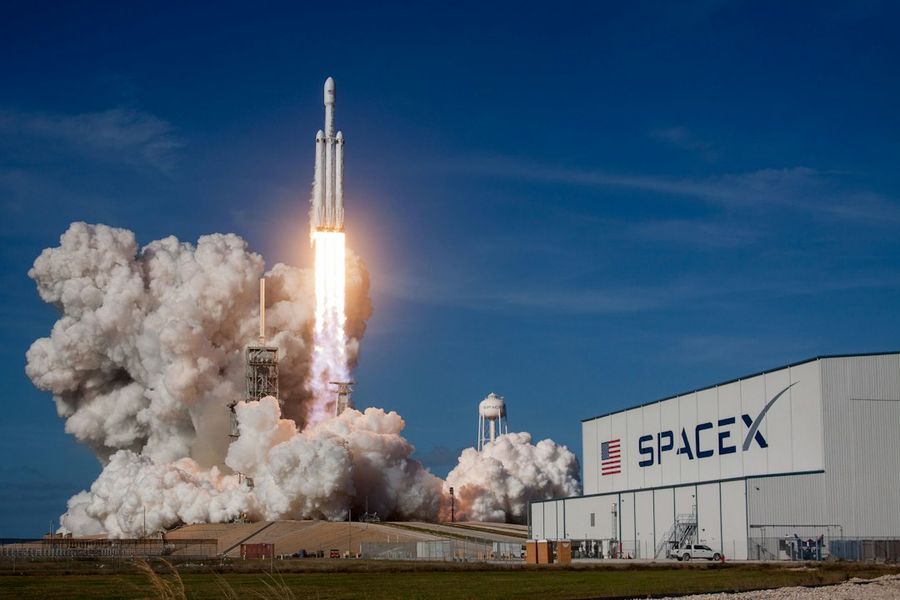
When SpaceX’s colossal Starship roared back to Earth and snagged a perfect landing after Flight 15, the moment felt less like a routine test and more like a headline‑making milestone. It wasn’t just a booster touching down; it was the culmination of years of engineering, a litmus test for reusability, and a clear signal that the era of fully reusable, interplanetary rockets is inching from theory to practice. For anyone who follows space tech, satellite services, or simply dreams of a future where humanity hops between planets, this achievement reshapes timelines, business models, and the very imagination of what’s possible.
Background / What Led to This
Starship’s journey began in 2012 under the codename “Mars Colonial Transport,” a bold vision to ferry crews and cargo to the Red Planet. Over the next decade, SpaceX iterated through a series of prototypes—SN1 through SN15—each one a learning platform for the integrated stainless‑steel vehicle and its massive Raptor engines. Early flights were suborbital hop tests, focusing on ascent, flip‑over, and soft‑landing capabilities. By the time SN8 launched in December 2020, the company had already proved that a fully reusable second stage could survive re‑entry heat and perform a controlled descent.
Flight 15, officially designated SN15, built on the lessons of its predecessors. Engineers refined the thermal protection system, upgraded the Raptor 2 engine cycle for higher thrust‑to‑weight, and introduced a more robust avionics suite that could handle the intense data flow of a high‑energy ascent. The launch also marked the first time SpaceX integrated a full‑scale payload mock‑up—a 10‑ton satellite stack—to simulate real‑world mission mass. All of these upgrades were not isolated tweaks; they were part of a strategic roadmap that aims to transition Starship from a test vehicle to an operational launch system for both NASA and commercial customers.
What Exactly Happened
On the crisp morning of 12 May 2024, Starship lifted off from Launch Pad 39A at Kennedy Space Center, igniting three Raptor engines that together produced roughly 5 million pounds of thrust. The vehicle accelerated to Mach 5 within the first 90 seconds, then executed a brief coast before the Super Heavy booster separated at an altitude of 70 km. The second stage, now a standalone Starship, continued its ascent on three Raptor Vac engines, reaching a peak altitude of 150 km—well beyond the Kármán line, the internationally recognized boundary of space.
At the apex, Starship performed a “boost‑back” burn, turning its nose back toward Earth and setting up a precise re‑entry corridor. The thermal protection tiles, now reinforced with a new carbon‑fiber composite, endured temperatures exceeding 3,000 °F. As the vehicle descended, the aerodynamic flaps deployed, providing fine‑grained control that kept it on a narrow trajectory. Finally, the three landing legs extended, and the vehicle touched down on the autonomous drone ship “Of Course I Still Love You” with a vertical velocity of less than 1 m/s—well within the target envelope for a clean recovery.
Telemetry confirmed that all 12 Raptor engines performed nominally, with the thrust‑vector control system maintaining stability throughout the flight. Post‑flight inspections revealed no structural damage to the heat shield, and the Raptor engines showed wear patterns consistent with design expectations, confirming that the upgraded materials are holding up under real‑world stresses.
Industry Impact
The successful catch of Flight 15 reverberates across the aerospace sector for three main reasons. First, it validates the economics of rapid reusability. If Starship can be turned around in days rather than months, launch costs could drop from the current $2,000‑$3,000 per kilogram to under $500 per kilogram for heavy payloads—a price point that would democratize access to space for smaller nations, universities, and even private enterprises.
Second, the flight demonstrates that a fully integrated launch system can handle both crewed and cargo missions without extensive modifications. NASA’s Artemis program, which already contracts SpaceX for lunar lander deliveries, can now consider Starship as a single‑stage solution for delivering habitats, scientific instruments, and eventually astronauts to the Moon and beyond. This reduces the logistical complexity of staging multiple rockets and simplifies mission architecture.
Finally, the event forces competitors—Blue Origin, United Launch Alliance, and emerging European and Asian firms—to accelerate their own reusable vehicle programs. The bar for “acceptable” turnaround time and flight frequency has been raised, and investors are likely to shift capital toward projects that can match or undercut SpaceX’s cost curve. In short, Flight 15 isn’t just a win for Elon Musk’s team; it’s a catalyst that could reshape the global launch market within the next five years.
What This Means for You
For the average tech enthusiast, the implications are both tangible and aspirational. Lower launch costs translate to more satellite constellations, which improves global broadband coverage, Earth‑observation data, and even GPS accuracy. If you’re a startup developing a climate‑monitoring app, you could soon afford higher‑resolution imagery from a dedicated Starship‑launched microsatellite. For gamers and VR creators, the proliferation of low‑latency, high‑bandwidth space‑based internet could enable truly immersive cloud‑gaming experiences with minimal lag.
On a personal level, the successful flight brings the notion of space tourism a step closer. While the first passenger flights will still command premium prices, the eventual trickle‑down effect could make orbital trips affordable for a broader segment of the population. Moreover, the engineering breakthroughs—advanced heat‑shield materials, AI‑driven flight controls, and high‑thrust methane engines—are likely to spin off into automotive, energy, and manufacturing sectors, creating new job opportunities and tech ecosystems that you may directly benefit from.
What to Expect Next
SpaceX’s roadmap indicates that the next milestone is an orbital test flight—Starship will aim to achieve a full orbital insertion, deploy a payload, and then perform a controlled re‑entry and landing. That flight, tentatively labeled “Flight 16,” is slated for early 2025, pending regulatory clearance from the FAA. In parallel, SpaceX is already negotiating with several commercial satellite operators for dedicated Starship launches, and NASA is finalizing a crewed lunar mission architecture that could see astronauts aboard Starship by 2027.
Regulators are also tightening oversight on debris mitigation and noise impact, so we may see stricter licensing requirements that could affect launch cadence. However, SpaceX’s track record of working closely with the FAA suggests that any hurdles will be addressed collaboratively. Expect to see more frequent updates from the company, live‑streamed launches, and perhaps even a public “watch‑party” model that lets enthusiasts experience the thrill of a launch from their living rooms.
Frequently Asked Questions
How does Starship’s reusability differ from Falcon 9?
Falcon 9’s first stage lands vertically and is refurbished for subsequent flights, but the upper stage is expendable. Starship is designed to be 100 % reusable: both the booster (Super Heavy) and the second stage (Starship) land and are turned around for the next launch, dramatically reducing material waste and cost.
Will Starship be safe for crewed missions?
SpaceX has incorporated multiple redundant systems, including eight Raptor engines for launch and three for landing, each capable of independent operation. The vehicle also features a launch abort system and a robust heat‑shield design that has been validated through successive high‑stress flights, making it one of the safest crewed launch platforms under development.
When can commercial customers expect to book a Starship launch?
SpaceX aims to open commercial bookings after the first successful orbital flight, projected for early 2025. Initial slots will likely be allocated to large‑scale satellite constellations and government contracts, with smaller payload opportunities opening up as the launch cadence increases.
Conclusion
SpaceX’s successful catch of Starship Flight 15 isn’t just a technical triumph; it’s a tangible indicator that fully reusable, heavy‑lift launch vehicles are moving from experimental to operational. The ripple effects—lower costs, faster turnaround, and broader access—promise to accelerate innovation across telecommunications, climate science, tourism, and beyond. As the industry watches the next orbital attempt, one thing is clear: the future of space travel is no longer a distant dream, but an accelerating reality that will shape our daily lives in ways we’re only beginning to understand.