Imagine stepping into a bustling 17th‑century café where the aroma of freshly brewed coffee mingles with the hum of heated debate, handwritten notes, and the clink of porcelain cups. That was the daily reality in the coffeehouses of London, Paris, and Amsterdam—social hubs that unintentionally became the incubators of modern science. Today, as remote work and virtual labs dominate, understanding how these early “co‑working spaces” sparked a scientific revolution offers fresh insight into the power of informal collaboration, the value of interdisciplinary dialogue, and the cultural forces that still shape breakthroughs.
Background / What Led to This
The story begins in the early 1600s, when the Ottoman Empire’s trade routes introduced coffee to Europe. By the 1650s, coffeehouses sprouted across major ports, offering a cheap, caffeine‑charged alternative to taverns and alehouses. Unlike the latter, coffeehouses prohibited alcohol, encouraging sober conversation and attracting merchants, diplomats, and—crucially—intellectuals. In England, the “Penny Universities” charged a single penny for a cup and a chance to exchange ideas, while in France the Café Procope became a meeting point for Voltaire and Diderot. These venues were not just about drinking; they were about accessing newspapers, pamphlets, and the latest scientific pamphlets that circulated in print.
What Exactly Happened
Three interlocking dynamics turned coffeehouses into scientific crucibles:
1. Information Networks. Coffeehouses hosted the earliest versions of today’s RSS feeds. Proprietors displayed the latest foreign gazettes, ship logs, and scientific journals. Patrons could read, annotate, and discuss findings in real time, accelerating the diffusion of knowledge that previously moved at the speed of a handwritten letter.
2. Cross‑Disciplinary Mix. A merchant trading spices might sit beside a mathematician calculating navigation routes. The resulting serendipitous conversations broke down disciplinary silos, prompting questions like “Can Newton’s laws improve ship steering?” and “What chemical properties does coffee have that affect cognition?” Such cross‑pollination seeded early experimental philosophy.
3. Collective Skepticism. The coffeehouse culture prized debate. No claim was accepted without challenge. This environment nurtured the empirical mindset championed by the Royal Society, which itself was founded in 1660 by a group of coffee‑house regulars. Their famous motto, “Nullius in verba” (Take nobody’s word for it), echoed the skeptical, evidence‑based discussions that unfolded over steaming mugs.
By the late 17th century, coffeehouses had become de‑facto research labs. Figures like Robert Hooke presented his microscopy discoveries at the “Coffee House Club,” while Isaac Newton’s *Principia* circulated among patrons before formal publication. The informal setting lowered barriers to entry, allowing amateur natural philosophers to contribute alongside university‑trained scholars.
Industry Impact
The ripple effects of coffeehouse‑driven science are still evident in today’s tech and research ecosystems. First, the concept of an open, low‑cost venue for idea exchange foreshadowed modern coworking spaces and hackathons. Companies now design “innovation cafés” where engineers, designers, and marketers mingle over free espresso, mimicking the fluid dialogue of 17th‑century cafés.
Second, the coffeehouse model demonstrated the power of rapid information sharing—a principle that underpins today’s preprint servers (arXiv, bioRxiv) and open‑access journals. The speed at which a new discovery could be discussed in a coffeehouse mirrors the instantaneous commentary on a preprint, compressing the feedback loop that fuels scientific progress.
Third, the interdisciplinary ethos that coffeehouses cultivated is now a strategic priority for R&D departments. Organizations invest heavily in “cross‑functional teams” because history shows that breakthroughs often arise at the intersection of fields—a lesson first learned when a ship‑builder’s question sparked Newton’s laws of motion.
What This Means for You
For readers, the coffeehouse narrative isn’t just a nostalgic footnote; it’s a blueprint for personal and professional growth. If you’re a freelancer, entrepreneur, or remote worker, recreating a coffeehouse environment—whether physically or virtually—can boost creativity. Simple steps include:
- Set up a dedicated “idea corner” with whiteboards, coffee, and a rotating roster of guest speakers.
- Curate a daily “news feed” of industry articles, research papers, and trend reports, mirroring the newspaper stacks of historic cafés.
- Encourage open‑ended questioning and peer critique, fostering the same skeptical rigor that propelled the Scientific Revolution.
On a broader scale, supporting open‑access publishing and community‑driven platforms helps preserve the democratic spirit of coffeehouse science. When you vote with your subscription or share a preprint, you’re keeping the tradition of free, rapid knowledge exchange alive.
What to Expect Next
The legacy of coffeehouses is evolving. As AI‑driven recommendation engines become the new “newspaper rack,” we may see virtual coffeehouses where avatars discuss data sets in real time. Already, platforms like Discord and Clubhouse host “science cafés” that blend live audio, screen sharing, and instant polling. Expect these digital venues to adopt the same low‑entry, high‑dialogue model, but with global reach—potentially democratizing scientific discourse even further.
Meanwhile, urban planners are re‑examining the physical coffeehouse as a civic asset. Cities like Copenhagen and Melbourne are incentivizing cafés that host public lectures, maker‑space workshops, and citizen‑science nights, directly linking community spaces to research institutions. This resurgence hints at a future where the line between “social” and “scientific” venues blurs once again.
Frequently Asked Questions
Why were coffeehouses called “Penny Universities”?
The term highlighted that for the price of a penny—a cup of coffee—anyone could access the latest news, engage in debates, and essentially receive an informal education. It underscored the democratizing effect of these spaces.
Did coffee itself influence scientific thinking?
While caffeine boosts alertness, historians argue the real impact was social: coffee created a neutral ground where ideas could be exchanged without the hierarchical constraints of courts or universities. The stimulant effect was a bonus, not the primary catalyst.
Can modern coworking spaces replicate the coffeehouse effect?
Yes, if they prioritize open information flow, interdisciplinary mingling, and a culture of constructive skepticism. Physical design (communal tables, easy access to print media) and programmed events (talks, debates) are key ingredients.
Conclusion
The humble coffeehouse proved that groundbreaking science doesn’t always need a vaulted laboratory; sometimes, all it takes is a cup of coffee, a willing audience, and a willingness to question everything. By studying how these early cafés turned casual conversation into a catalyst for the Scientific Revolution, we uncover timeless lessons about collaboration, openness, and the social infrastructure that fuels innovation. Whether you’re sipping a latte in a modern coworking hub or joining a virtual “science café” on Discord, you’re part of a lineage that stretches back centuries—one that reminds us that the next great discovery could be just a conversation away.
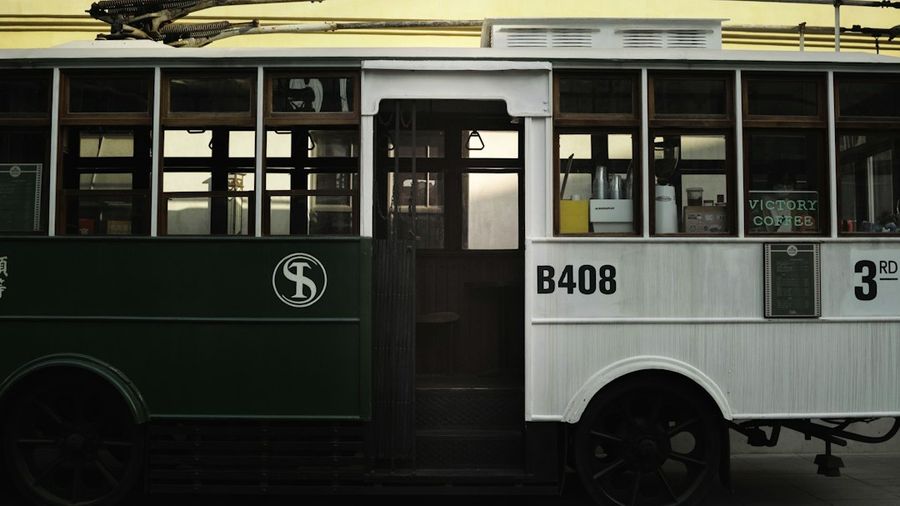
Photo by Arvin Yuan on Unsplash