
When OpenAI announced GPT-6 Sol and Luna, the tech world sat up straight. These aren’t just incremental upgrades; they’re a bold statement that the era of ultra‑large, multimodal AI is arriving faster than most predicted. In this article we unpack the science, the market ripples, and the practical implications for developers, enterprises, and everyday users.
Background / What Led to This
OpenAI’s journey from the original GPT to GPT-4 was marked by a steady climb in scale, capability, and accessibility. Each version introduced larger parameter counts, better fine‑tuning, and broader modality support—text, images, code, and even audio. By the time GPT‑4 rolled out, the model could generate coherent essays, create artwork, and debug code, all within a single API call. However, the rapid adoption of these models exposed bottlenecks: latency at scale, hallucination rates, and the difficulty of customizing behavior without massive data sets.
Industry pressure intensified as competitors like Anthropic, Google DeepMind, and Cohere launched their own next‑gen models. Enterprises demanded tighter security, more deterministic outputs, and the ability to run models on private infrastructure. Meanwhile, research showed that scaling alone was no longer enough; architectural innovations such as sparse mixtures, retrieval‑augmented generation, and better grounding in external knowledge were needed to push the frontier.
OpenAI responded by investing heavily in both hardware (custom silicon for transformer acceleration) and software (new training pipelines that blend dense and sparse layers). The result is GPT‑6 Sol, a text‑centric behemoth optimized for speed and factuality, and Luna, a multimodal sibling that seamlessly blends text, images, video, and audio in a single reasoning stream. Both models were trained on a curated dataset of over 10 trillion tokens, enriched with real‑time web snapshots and domain‑specific corpora, giving them a temporal awareness that previous generations lacked.
What Exactly Happened
On September 20, 2026, OpenAI published a detailed blog post titled “Introducing GPT‑6 Sol and Luna.” The announcement highlighted three headline features:
- Unified Multimodal Reasoning: Luna can ingest a video clip, a spoken query, and a text snippet simultaneously, then produce a coherent answer that references all inputs.
- Dynamic Retrieval Engine: Both Sol and Luna query a live knowledge base updated every hour, dramatically reducing hallucinations on time‑sensitive topics.
- Adaptive Compute Allocation: Using a novel “Sol‑Luna Scheduler,” the system automatically routes lightweight requests to Sol’s fast inference path while reserving Luna’s heavy‑weight resources for complex multimodal tasks.
OpenAI also released a new API tier—“Sol‑Lite”—targeted at startups that need sub‑second latency for chat‑bots and real‑time translation. Pricing is tiered based on compute units, but the company promises a 30 % cost reduction compared to GPT‑4 for comparable workloads, thanks to the efficiency gains of the sparse‑mixture architecture.
From a technical standpoint, Sol incorporates a 1.2‑trillion‑parameter dense core surrounded by a 4‑trillion‑parameter sparse mixture of experts (MoE). Luna adds a vision transformer branch and an audio encoder, all tied together by a cross‑modal attention layer that learns to align semantics across modalities. Training leveraged a hybrid of supervised fine‑tuning and reinforcement learning from human feedback (RLHF), with an added “truth‑bias” reward model that penalizes fabricated facts.
Industry Impact
The rollout of Sol and Luna sends shockwaves through several sectors. In enterprise software, the ability to query live data while generating natural‑language reports could replace dozens of custom ETL pipelines. Companies like Salesforce and ServiceNow are already piloting Luna‑powered dashboards that turn raw logs into actionable insights without a data engineer in the loop.
In creative media, Luna’s video‑plus‑text reasoning opens doors for automated storyboarding, dubbing, and even interactive game narration. Studios are experimenting with “AI‑directed” cuts where a director provides a mood board and Luna generates a rough edit, dramatically shortening pre‑production cycles.
Education technology also stands to benefit. Sol’s rapid, fact‑checked responses make it ideal for tutoring platforms that need to stay current with curricula. Meanwhile, Luna can analyze a student’s spoken explanation, visual diagram, and written work in one go, offering personalized feedback that feels almost human.
On the competitive front, the announcement forces rivals to accelerate their own multimodal roadmaps. Google’s Gemini and Anthropic’s Claude series will need to match or exceed Sol/Luna’s retrieval latency and cross‑modal fluency to stay relevant. Venture capital is already shifting, with a noticeable uptick in funding for startups that specialize in “AI‑augmented pipelines” built on top of these new APIs.
What This Means for You
If you’re a developer, the immediate takeaway is that you can now build applications that understand and generate across text, images, audio, and video without stitching together separate models. The unified API means fewer integration headaches and lower operational overhead. For example, a customer‑support bot could read a screenshot of an error message, listen to the user’s spoken description, and reply with step‑by‑step instructions—all in real time.
For businesses, the cost‑efficiency of Sol‑Lite combined with Luna’s accuracy translates to faster time‑to‑market for AI‑driven products. Marketing teams can generate video ad variants on the fly, while legal departments can use Sol to summarize contracts and flag risky clauses with a higher degree of confidence than before.
End‑users will notice more reliable AI assistants. The dynamic retrieval engine means your virtual assistant will know the latest stock price, weather alert, or policy change without you having to specify a date. Hallucinations—those frustrating moments when an AI makes up facts—should become far rarer, especially in high‑stakes domains like finance or healthcare.
What to Expect Next
OpenAI has hinted at a roadmap that includes “Sol‑Edge,” a version optimized for edge devices, and “Luna‑XR,” which will extend multimodal reasoning into augmented and virtual reality environments. Both are slated for beta release in early 2027, suggesting that the company is already thinking beyond the desktop and cloud.
In the near term, we can anticipate a wave of third‑party tools built on the Sol/Luna APIs. Expect plug‑and‑play integrations for popular low‑code platforms, new plugins for IDEs that can generate code from design mockups, and SaaS products that offer “AI‑first” analytics dashboards out of the box.
Regulators are also watching closely. The dynamic retrieval feature raises questions about data provenance and privacy, especially when the model pulls from live web content. OpenAI has pledged transparency reports and an opt‑out mechanism for content owners, but the conversation around AI‑generated media attribution is only beginning.
Frequently Asked Questions
How does Luna handle copyrighted material?
Luna respects OpenAI’s content policy: it does not reproduce copyrighted text or images verbatim unless the user provides explicit permission. For transformation tasks—like summarizing a news article or generating a stylized image—Luna applies a “fair‑use” filter and logs the request for auditability.
Can I run Sol or Luna on my own hardware?
OpenAI offers a “Private Cloud” deployment for enterprise customers, allowing Sol and Luna to run on dedicated clusters behind a firewall. The hardware requirements are significant (multiple A100‑equivalent GPUs for Sol, additional TPUs for Luna’s vision/audio branches), so most small businesses will continue to use the hosted API.
Will the models improve over time without additional training?
Yes. Both Sol and Luna use a continuous retrieval system that updates its knowledge base hourly. While the core model parameters stay static, the live data feed helps the models stay current on facts, trends, and emerging terminology.
Conclusion
GPT‑6 Sol and Luna represent a decisive step toward truly unified, real‑time AI that can see, hear, and speak with the same fluency as it writes. For developers, enterprises, and everyday users, the promise is clearer, faster, and more trustworthy AI experiences. As the ecosystem rallies around these new capabilities, the next few years will likely redefine how we interact with digital information—making the future of work, creativity, and learning more intelligent than ever before.
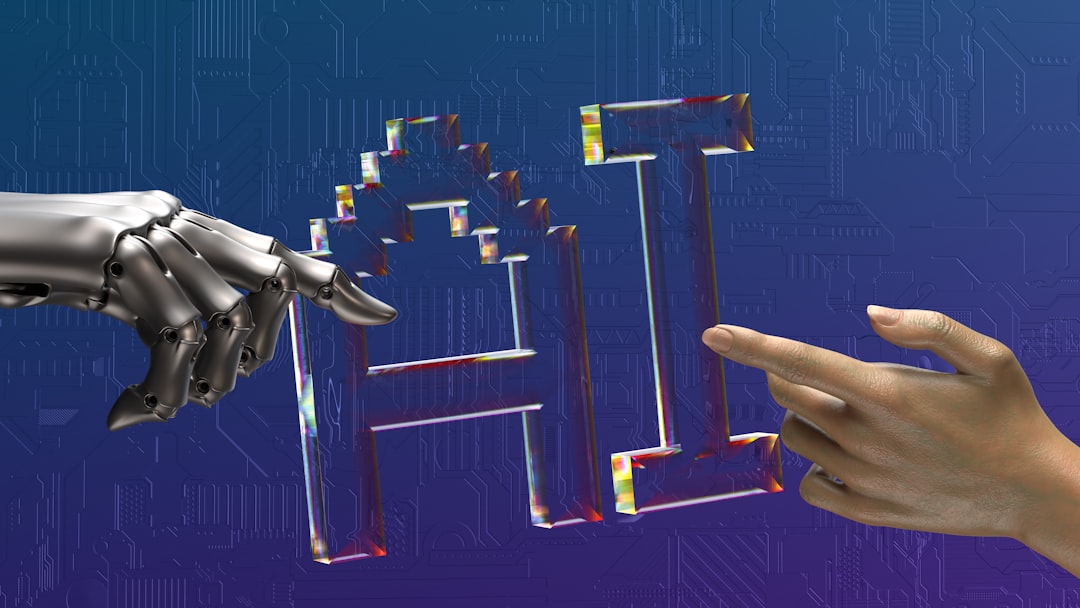
Photo by Steve A Johnson on Unsplash