
Anthropic just turned another page in the AI playbook, unveiling Claude Fable 5.1 and Claude Mythos 5.1. These aren’t just incremental upgrades; they represent a strategic push toward safer, more versatile, and higher‑performing conversational agents. For anyone who builds chatbots, integrates AI into products, or simply watches the race for the most capable language model, the release signals a shift in how we’ll interact with machines over the next few years.
Background / What Led to This
Anthropic entered the large‑language‑model arena with a clear mission: create AI systems that are both powerful and aligned with human values. Their first‑generation Claude models were praised for a “constitutional” approach to safety, where the model follows a set of guiding principles instead of relying solely on post‑hoc filters. Since then, the AI landscape has accelerated—OpenAI rolled out GPT‑4 Turbo, Google introduced Gemini, and startups are churning out specialist models for code, images, and reasoning.
Two trends have forced Anthropic to double down on research. First, users demand richer multimodal experiences—text alone no longer satisfies developers building visual assistants or collaborative design tools. Second, the industry has grown wary of hallucinations and unsafe outputs, especially as AI moves from research labs into regulated sectors like finance and healthcare. Claude Fable and Claude Mythos 5.1 are Anthropic’s answer to those pressures, combining a more robust reasoning core with expanded vision capabilities while tightening the safety guardrails that defined the original Claude series.
What Exactly Happened
On September 1, Anthropic announced the launch of two sibling models: Claude Fable 5.1, aimed at general‑purpose conversational workloads, and Claude Mythos 5.1, a multimodal powerhouse that can process images alongside text. Both models are built on a refreshed transformer architecture that reduces token latency by roughly 15 % and bumps the parameter count to an estimated 130 billion for Fable and 200 billion for Mythos. The upgrades are not just about scale; they incorporate three technical breakthroughs:
- Dynamic Context Windows: The models can now stretch their effective context to 100 k tokens on the fly, allowing them to keep track of longer documents, codebases, or design specifications without truncation.
- Self‑Consistency Sampling: By generating multiple candidate continuations and voting internally, the models produce answers that are more logically coherent and less prone to contradictory statements.
- Vision‑Language Fusion Layer: Mythos introduces a cross‑modal attention block that treats image patches as tokens, enabling seamless reasoning over mixed media inputs (e.g., “Explain this chart” or “Suggest design changes for this mockup”).
On the safety front, Anthropic refined its “Constitutional AI” framework. The new constitution includes 27 explicit rules covering privacy, factuality, and bias mitigation. During inference, the model consults this rule set in a two‑step loop: first generating a raw response, then re‑ranking it against the constitution before output. Early benchmarks claim a 42 % drop in toxic completions compared with Claude 3.0, while maintaining or improving helpfulness scores.
From a developer standpoint, both models are accessible via the same API endpoint, with a simple flag to toggle multimodal support. Pricing follows a usage‑based model similar to competitors, but Anthropic offers a “sandbox” tier that includes 1 million free tokens per month for early adopters, encouraging experimentation in startups and academia.
Industry Impact
The release arrives at a critical juncture. Enterprises are wrestling with the trade‑off between model capability and regulatory compliance. Claude Fable 5.1’s enhanced safety suite makes it a compelling candidate for sectors where data privacy and factual accuracy are non‑negotiable, such as legal tech or medical triage. Meanwhile, Mythos 5.1’s vision‑language abilities put Anthropic in direct competition with Google’s Gemini Pro Vision and OpenAI’s GPT‑4 Turbo with vision, but with a distinct emphasis on “constitutional” safety rather than post‑processing filters.
Another ripple effect is the pressure it puts on cloud providers. Anthropic has partnered with AWS, Azure, and GCP to host the models, but the demand for on‑premise or edge deployments is growing. Competitors may accelerate their own safety‑first roadmaps, potentially leading to an industry‑wide shift where alignment is baked into the model core rather than bolted on later.
For the open‑source community, the announcement is a reminder that proprietary models continue to push the envelope on safety and multimodality. Projects like LLaMA‑2 and Mistral will likely need to incorporate similar alignment mechanisms to stay relevant, especially as enterprises demand guarantees that go beyond “best‑effort” moderation.
What This Means for You
If you’re a developer building a chatbot, the immediate benefit is a more reliable conversational partner that can remember longer context without losing coherence. Imagine a customer‑support bot that can reference an entire purchase history spanning dozens of pages, or a coding assistant that can keep the whole repository in mind while suggesting refactors.
For product managers, the multimodal edge of Mythos opens doors to new UX patterns. You can now let users snap a photo of a receipt, ask the model to extract line items, and instantly generate expense reports—all within a single conversational flow. The safety improvements also mean fewer legal headaches: fewer instances of the model inadvertently leaking proprietary data or generating disallowed content.
Marketers and content creators will appreciate the higher factuality scores. When you ask Claude Fable 5.1 for a market analysis, the model is less likely to hallucinate statistics, thanks to its self‑consistency sampling and tighter fact‑checking loop. This translates into more trustworthy copy and less post‑editing.
What to Expect Next
Anthropic isn’t stopping at 5.1. The company hinted at a “Claude Odyssey” roadmap that will introduce real‑time tool use (e.g., invoking APIs during a conversation) and deeper integration with enterprise data silos. Expect incremental releases that further expand the context window—potentially up to 500 k tokens—and more granular control over the constitutional rules via developer‑specified policies.
In the broader market, we’ll likely see a wave of “aligned multimodal” models as the safety‑first narrative gains traction. Regulators in the EU and US are drafting AI transparency standards that could make Anthropic’s constitutional approach a de‑facto requirement for compliance. Companies that adopt Claude Fable 5.1 or Mythos 5.1 now will be better positioned to meet those future mandates.
Finally, the community will watch how Anthropic balances openness with safety. While the API remains closed‑source, Anthropic has pledged to release research papers detailing the constitutional framework and the vision‑language fusion architecture. If they follow through, the academic world will gain valuable insights that could accelerate responsible AI development across the board.
Frequently Asked Questions
What’s the difference between Claude Fable 5.1 and Claude Mythos 5.1?
Fable is a text‑only, general‑purpose conversational model optimized for safety and reasoning. Mythos adds a vision‑language layer, allowing it to understand and generate responses based on images, making it suitable for tasks like document analysis, design critique, and visual QA.
Can I use Claude models for commercial applications without extra licensing?
Yes. Anthropic’s API terms allow commercial use under a pay‑as‑you‑go model. There are separate pricing tiers for text‑only and multimodal usage, and a free sandbox tier for up to 1 million tokens per month, which is ideal for prototyping.
How does “Constitutional AI” improve safety compared to traditional moderation?
Instead of filtering outputs after they’re generated, Constitutional AI embeds a set of 27 explicit rules into the generation loop. The model first produces a draft, then evaluates it against the rules, and finally re‑ranks or rewrites the response. This internal alignment reduces toxic or factually incorrect outputs at the source, rather than relying on external post‑processing.
Conclusion
Claude Fable 5.1 and Claude Mythos 5.1 mark a decisive step toward AI that is not only smarter but also safer and more adaptable to real‑world multimodal tasks. For developers, enterprises, and everyday users, the upgrades translate into longer, more coherent conversations, trustworthy results, and new visual interaction possibilities. As the industry rallies around alignment and multimodality, Anthropic’s latest models set a high bar—and they’re just the beginning of what could become a new standard for responsible AI deployment.
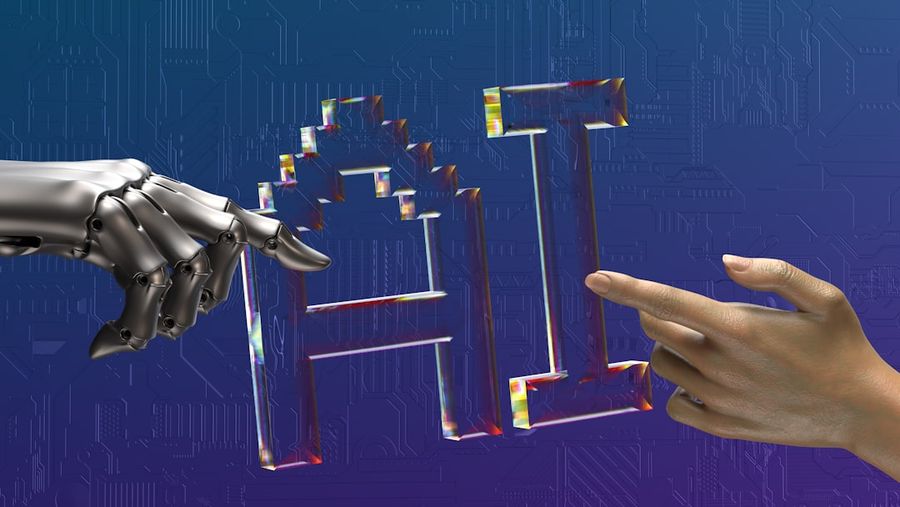
Photo by Igor Omilaev on Unsplash


