
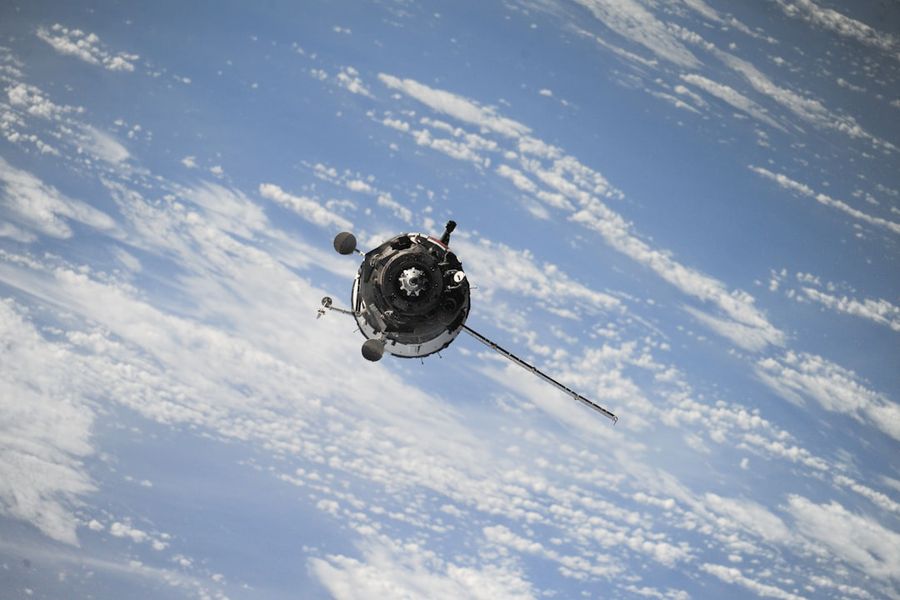
NASA has achieved the remarkable feat of extending the operational life of its 48-year-old Voyager 2 probe for yet another year, a testament to human ingenuity and the relentless pursuit of understanding our cosmos. This decision not only underscores the significance of the Voyager 2 in the realm of space exploration but also opens up new avenues for scientific discovery. As we delve into the background, the specifics of this achievement, and its implications, it becomes clear that this is more than just a technological feat; it’s a beacon of hope for what can be achieved through dedication and innovative problem-solving.
Background / What Led to This
The Voyager 2 probe, launched in 1977, has been a cornerstone of space exploration, providing invaluable insights into the outer Solar System and beyond. Initially designed to study the outer Solar System, the probe has far exceeded its expected lifespan, entering interstellar space and continuing to transmit critical data back to Earth. The challenges of maintaining such an aged spacecraft are multifaceted, from managing power consumption to dealing with the harsh conditions of space. Despite these hurdles, NASA’s commitment to extending the probe’s life is a strategic move, reflecting the agency’s broader goals of advancing our understanding of the universe.
What Exactly Happened
NASA’s ability to keep Voyager 2 operational for another year is the result of meticulous planning and resource management. By carefully allocating the probe’s power and prioritizing its systems, engineers have managed to overcome the significant challenge of dwindling energy reserves. This achievement is a direct result of the innovative approaches adopted by NASA, including the use of the spacecraft’s gyroscopes to make adjustments and minimize power usage. The extension of Voyager 2’s operational life not only highlights the ingenuity of NASA’s engineers but also underscores the importance of preserving our space exploration assets, even as they approach the end of their designed lifespans.
Industry Impact
The implications of NASA’s success with Voyager 2 are far-reaching, influencing both the immediate future of space exploration and the broader strategies of space agencies and private space companies. This achievement serves as a model for future missions, demonstrating the potential for extending the life of spacecraft through careful planning and technological innovation. Moreover, it underscores the value of long-term space missions, which can provide unique, longitudinal data sets that are invaluable for scientific research. The success of Voyager 2 also sparks conversations about the potential for repurposing or extending the life of other aging spacecraft, potentially unlocking new scientific opportunities without the need for entirely new missions.
What This Means for You
For the average reader, the continued operation of Voyager 2 might seem like a niche interest, relevant only to those deeply invested in space exploration. However, the impact of this achievement resonates more broadly. It symbolizes the human capacity for innovation and perseverance, showing that with the right mindset and resources, seemingly insurmountable challenges can be overcome. Moreover, the scientific discoveries facilitated by Voyager 2’s extended operation have the potential to inspire future generations of scientists, engineers, and explorers, contributing to a societal shift towards greater appreciation and support for space exploration and scientific inquiry.
What to Expect Next
As Voyager 2 continues on its journey, NASA and the broader scientific community will be closely monitoring its transmissions, eager to glean as much information as possible from its observations. The coming year will likely be marked by a mix of routine operations and strategic planning, as engineers work to maximize the probe’s remaining lifespan while also laying the groundwork for future missions that can build upon Voyager 2’s legacy. The immediate future of space exploration will be shaped by the lessons learned from Voyager 2, with a focus on sustainability, innovation, and pushing the boundaries of what is thought possible.
Frequently Asked Questions
What is the primary challenge in keeping Voyager 2 operational?
The main challenge is managing the probe’s power consumption, as its energy sources are dwindling. NASA has addressed this by prioritizing systems and using the spacecraft’s gyroscopes to minimize power usage.
How does the extension of Voyager 2’s life impact future space missions?
The success with Voyager 2 sets a precedent for potentially extending the life of other spacecraft, demonstrating the value of long-term missions, and influencing strategies for future space exploration projects.
What are the broader societal implications of NASA’s achievement with Voyager 2?
Beyond the scientific community, the achievement inspires a broader appreciation for innovation, perseverance, and the pursuit of knowledge, contributing to a cultural shift that values and supports space exploration and scientific research.
Conclusion
The decision to extend the life of Voyager 2 for another year is a landmark moment in the history of space exploration, reflecting both the ingenuity of NASA’s engineers and the enduring importance of the Voyager 2 mission. As the probe continues to venture deeper into interstellar space, its legacy as a trailblazer for space exploration will only continue to grow, inspiring future generations to reach for the stars and push the boundaries of human knowledge and achievement.


